
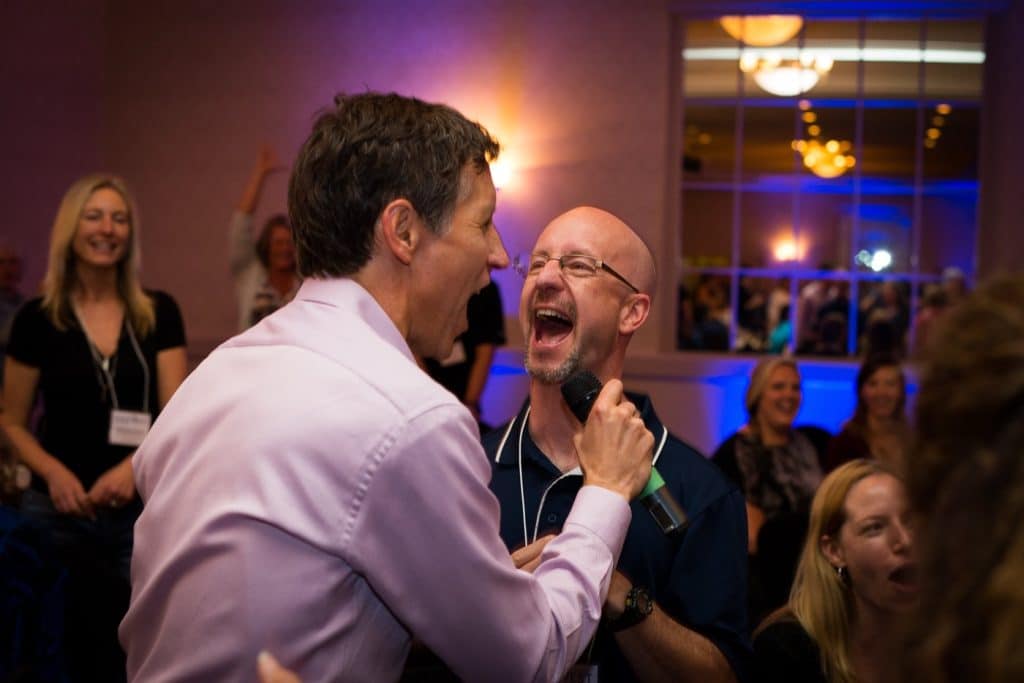
Music team building doesn’t require talent or anyone who thinks they can sing — just a group and one moment when every part comes together into something that couldn’t exist without all of them. Roger Haskett has known this for 34 years, and now he’s built it into an experience your team can walk into.
What Group Singing Actually Does to People
Oxford University’s Experimental Psychology group found group singing elevates mood and builds social bonding faster than almost any other shared activity (Dunbar et al., 2012, Evolutionary Psychology) — a physiological reset for a team that’s spent the day in back-to-back calls.
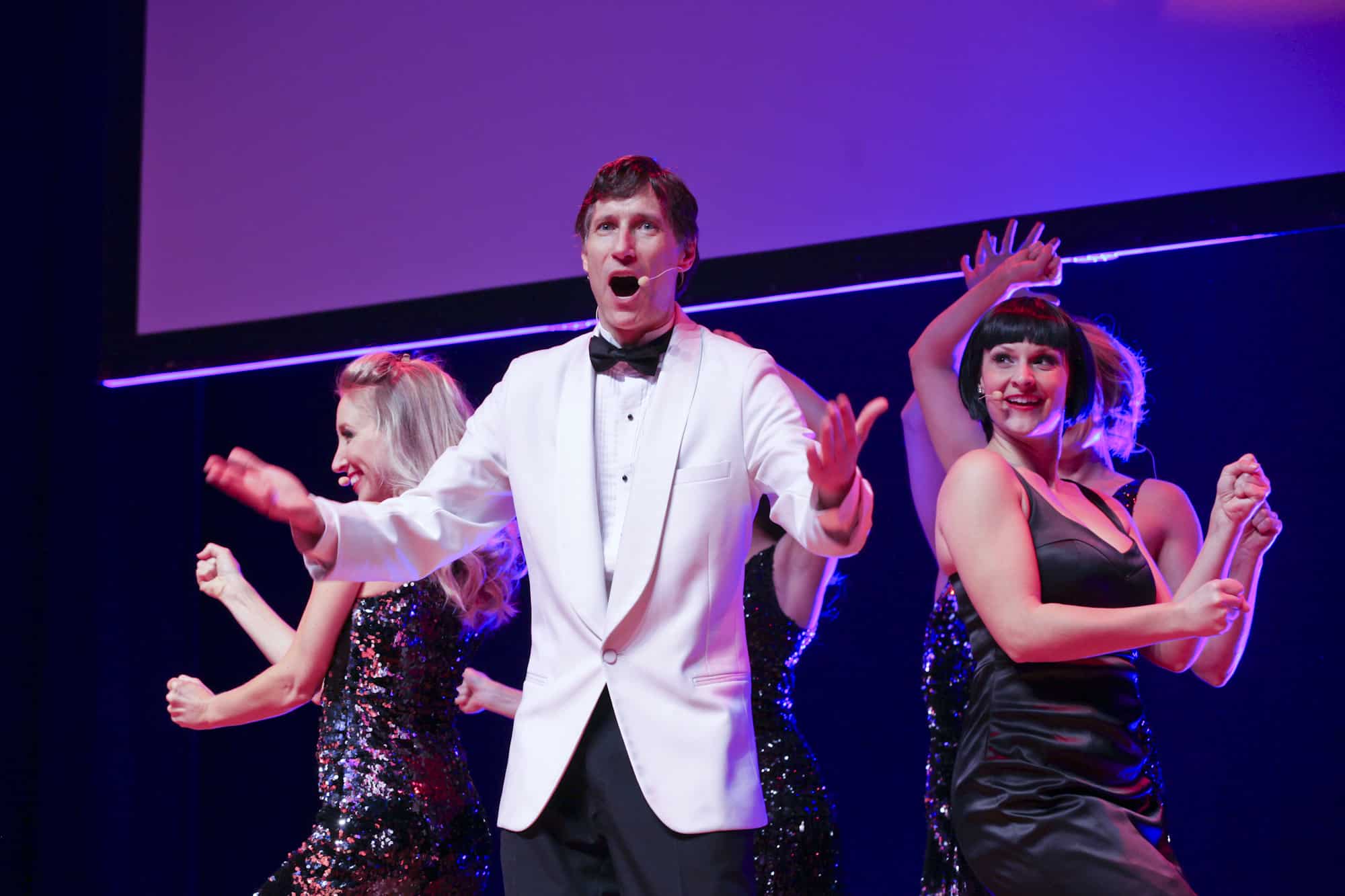
I love using music in my keynotes, our facilitation and retreats, our games, our shows. When I was given an opportunity to create something similar for our clients, I jumped at the chance.
Why I Jumped at the Chance
I’ve directed and acted in musical theatre for 15 or 20 years. We almost always rehearsed at night, after a full day of stressful work, then a fight through traffic — I had lots of reasons to be in a bad mood by the time I got there.
No matter how bad of a mood I was in on the way to that rehearsal, by the time I was driving home after having sung for hours, I was in the best mood. I was singing in the car. I’d dance and sing around the house.
Whatever problems I had to deal with were so much easier with all that positive power in my body, with all that belonging I had created by singing together with other people in a group — dealing with the biggest issues in life becomes faster, easier, & less demanding.
This Is What One Song, Every Voice: Team Harmony Sounds Like
One Song, Every Voice: Team Harmony, co-produced with Jana Berengel, who leads The Agency Singers, opens with fun, dynamic warm-up exercises that get everyone in the best mood, then splits participants into three vocal sections, each learning one part of a familiar song — Hey Jude, Sweet Caroline, Lean on Me. No experience required, no solos. Each part sounds incomplete alone, until all three come together.
“When you’re singing, feeling the beat in your body, when you’re in a group where you’re all making the same sound, a sound that cannot exist unless you all work together, it’s electrifying & deeply engaged.”
To see what this looks like in practice, click here.
— Roger Haskett, musical theatre performer and director
One Note. Your Part. The Wall of Sound.
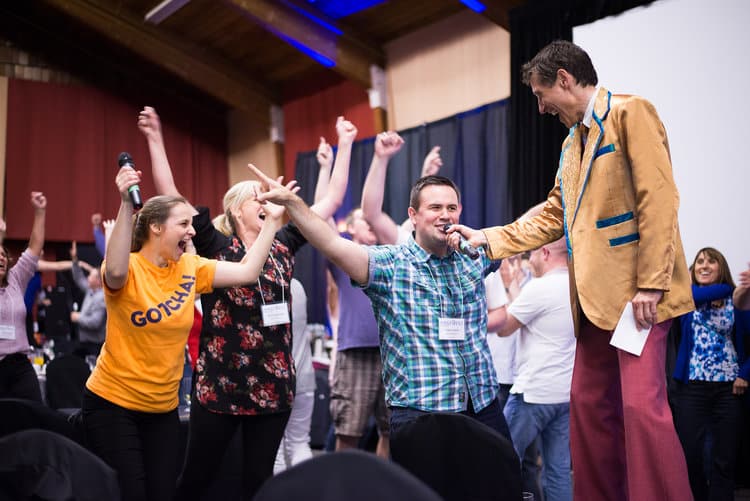
Active listening. Trust. Each contribution mattering to the whole. Amazing for introverts especially — the structure protects them. No one is exposed; everyone belongs to a section, so none of you is out there alone.
Adding this into a retreat, a conference, a team-building activity is genius — so potent and powerful. The problems are still there when your team drives home. What’s different is the power that the song created. That’s the engagement advantage.
Frequently Asked Questions About Music Team Building
What is music team building?
Music team building uses group singing as the structure for an experience that builds trust and belonging — every participant holds a role, and the outcome only exists when everyone contributes. One Song, Every Voice: Team Harmony is co-produced by Engagement Unlimited and The Agency Singers.
Do participants need to know how to sing?
No. Each group learns one part — no solos, no auditions. The reveal moment works regardless of individual ability.
What size groups does Team Harmony work for?
A wide range — it works especially well for remote or cross-departmental teams meeting in person. Reach out to us with your group details.
What can teams expect to get from this activity?
A much better-connected team — a group that’s created belonging and psychological safety to help resolve what they’re going through, what they’re dealing with at work. Remote teams get a way of connecting quickly and effortlessly, so they hit the ground running when it comes to fitting in, even though they’ve never been in the same room together before.
